


Most homeowners in the East Valley discover tile roof underlayment replacement cost the hard way: a roof leak appears after monsoon season, and a roofing contractor lifts a few tiles to reveal cracked, brittle felt that no longer sheds water. Understanding the true cost of underlayment replacement is crucial for Arizona homeowners, especially in Gilbert and the surrounding East Valley cities, because it helps prevent unexpected expenses and protects the value of your home. This guide is designed for Arizona homeowners—especially those in Gilbert, Mesa, Chandler, Tempe, and Scottsdale—who want to understand the real costs, process, and key factors involved in tile roof underlayment replacement. Knowing what drives these costs helps you avoid surprises, protect your investment, and make informed decisions when hiring a roofing contractor. Here, we break down what you can realistically expect to pay, what determines the final price, and how to evaluate an estimate before signing anything.
Quick Answer: What Arizona Homeowners Typically Pay
Published Arizona market estimates commonly place tile roof underlayment replacement around $4.00 to $6.00 per square foot for a typical lift-and-relay project. That would place a 2,000-square-foot roof around $8,000 to $12,000 as a general planning range. Larger, steeper, or more complex roofs can cost considerably more. These are market estimates rather than Advanced Precision Roofing prices; an actual quote depends on the roof’s size, pitch, tile condition, access, waterproofing details, and what is found after the existing tile and underlayment are removed.
Underlayment material alone represents only one part of the total project cost. On a tile roof, the complete roofing project also includes carefully lifting and staging reusable tile, removing the old underlayment, inspecting the roof deck, correcting necessary flashing and waterproofing details, installing the new underlayment system, and resetting the tile. Because of that additional labor, comparing tile roof underlayment replacement to a simple underlayment material price can be misleading.
Most of the expense is labor, not roofing material. Because the visible tile can often be reused, homeowners are renewing the waterproofing roofing system under an existing tile roof rather than buying a new roof. Advanced Precision Roofing is a local East Valley roofing contractor, and actual costs are always based on an on-roof roof inspection, roof pitch measurement, access evaluation, and deck condition once tiles are removed.
Why Tile Roof Underlayment Fails Before the Tile in Arizona
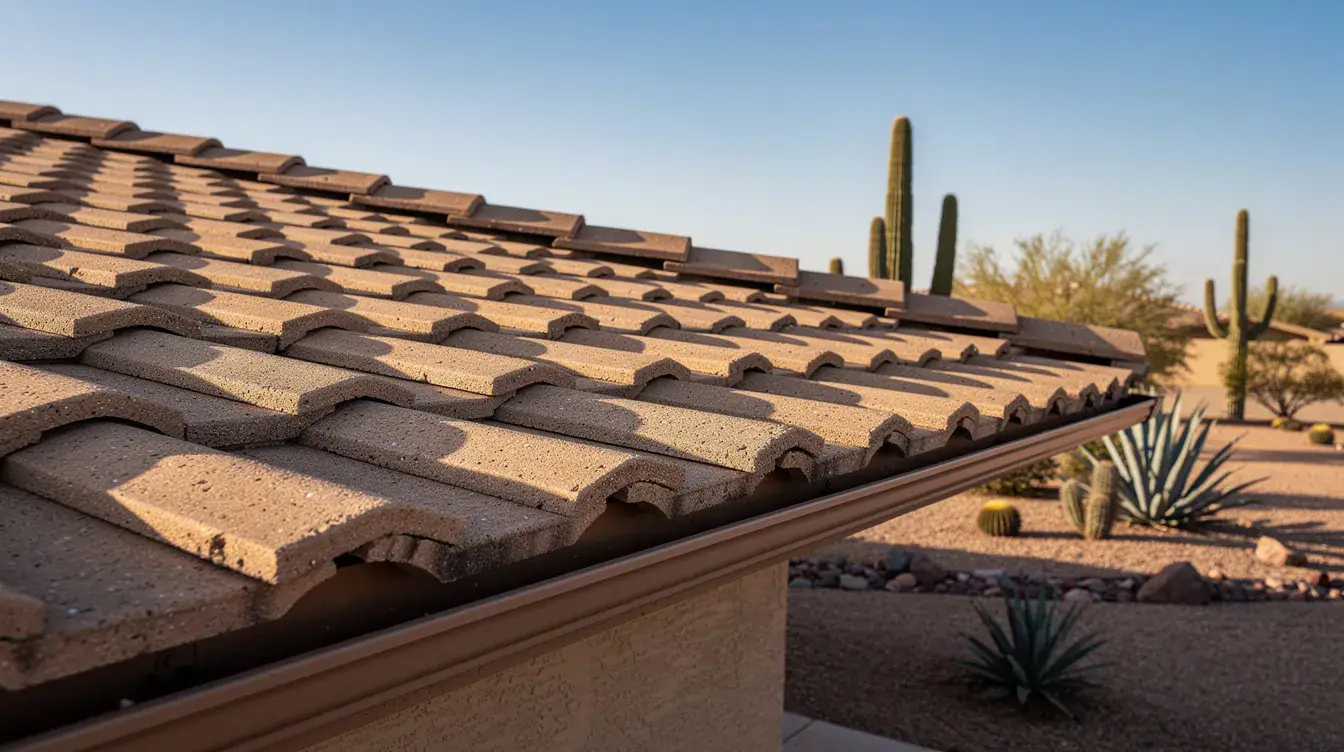
Tile on a tile roof serves as a sun shield and bulk water deflector. The roof underlayment beneath it is the actual waterproofing barrier; underlayment prevents moisture damage to roof decking and acts as a secondary barrier against leaks. When that membrane fails, water reaches the deck and the interior, even if every tile looks perfect from the street.
Arizona’s intense UV exposure and extreme summer heat accelerate the aging of roofing materials. Repeated thermal cycling can cause older asphalt-based felt underlayment to dry out, become brittle, and eventually crack. APR notes that builder-grade felt underlayment in Arizona commonly provides roughly 15 to 25 years of service, while the tile above it may remain usable much longer. Concrete or clay tiles, by contrast, can last over 50 years, which is why ongoing tile roof waterproofing in Gilbert’s climate focuses so heavily on protecting the hidden underlayment layer.
Many older tile roofs across Gilbert, Mesa, Chandler, and Scottsdale still have their original felt underlayment. In Arizona conditions, aging builder-grade felt can deteriorate long before the concrete or clay tile above it reaches the end of its useful life. Homeowners see good-looking tiles but still need to replace underlayment because slipped tiles, small gaps, and wind-driven monsoon rain push water down to the membrane. Once that membrane is brittle, a single storm can produce a roof leak.
Lift-and-Relay: What “Tile Roof Underlayment Replacement” Actually Involves
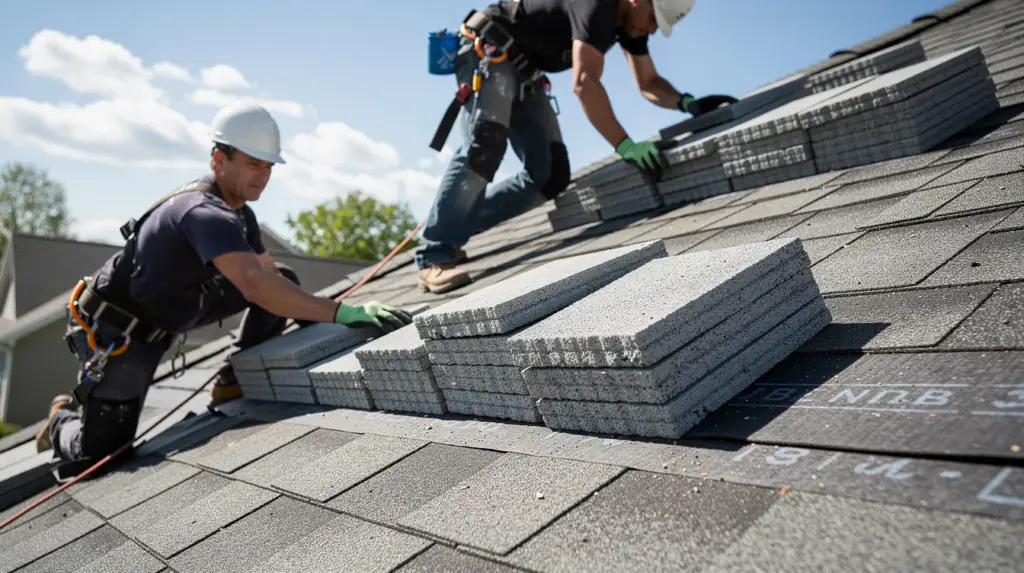
The standard method to replace roof underlayment on Arizona tile roofs is called lift-and-relay (also “remove and reset”). Tile roofs require careful removal and reinstallation of heavy tiles, making this a fundamentally different job than stripping and replacing an asphalt shingle roof and is best handled by specialists in tile underlayment replacement in Gilbert, AZ.
The process follows these steps:
- Carefully remove all tiles, stacking and sorting reusable pieces from broken tiles
- Strip old underlayment and old roofing materials from the deck
- Inspect and repair the roof deck and flashing
- Install new underlayment with proper laps, fasteners, and seam treatment
- Correct necessary valley, wall, flashing, penetration, and waterproofing details
- Relay usable tiles; replace broken tiles or missing pieces with matching profiles
Replacing the underlayment on a tile roof involves labor-intensive processes because every tile is handled at least twice. Common materials for underlayment include asphalt-saturated felt and synthetic underlayment; the choice is made before the crew starts. New flashings, valley metal, and drip edge details must meet current best practices. A professional crew will typically photo-document hidden conditions so the homeowner understands any change orders before work continues.
Major Cost Drivers for Tile Roof Underlayment Replacement
Beyond square footage, several factors determine your final invoice:
Roof size. Larger roof sizes typically increase material and labor costs. More area means more tile to remove and relay, more underlayment material, and more waste. Larger roofs push underlayment replacement costs higher on a nearly linear scale.
Roof pitch and complexity. Roof complexity, including steep pitches and multiple sections, raises labor and safety costs. Steeper roofs can increase labor, staging, and safety requirements because crews must move and handle heavy roofing tiles more carefully. Replacing underlayment under complex roof features like hips, valleys, dormers, and turrets can add to the total cost of the roofing project.
Tile condition. Existing tile condition affects both labor and material costs. Some tiles may already be cracked, while additional pieces can break during careful removal and handling. If the original profile is discontinued or difficult to match, sourcing replacement tile can add cost. Advanced Precision Roofing evaluates the existing tile during inspection and identifies expected replacement needs in the project scope.
Flashings and roof penetrations. Vents, skylights, HVAC stands, satellite mounts, and chimney flashings each require individual detailing. More penetrations equal more labor hours.
Deck condition. Decking and structural repairs can add costs after tiles are removed. Rot around eaves, valleys, or prior leak areas may not be visible until the old underlayment is stripped.
Access and location. Two-story homes, tight side yards, and limited driveway space in East Valley neighborhoods affect staging, disposal logistics, and crew efficiency. Local labor rates and geographic factors can drive pricing variations between different parts of the metro area.
A thorough estimate should spell out assumptions for deck repair allowances, tile replacement quantity, and disposal, not just a single lump sum.
How Roof Size, Pitch, and Layout Affect Your Final Price
Two roofs with identical house square footage can produce very different tile roof underlayment replacement cost figures because of roof geometry.
A low-pitch, relatively simple roof may fall toward the lower end of typical underlayment replacement costs. A two-story roof with multiple hips, valleys, penetrations, and transitions can cost substantially more even when the home’s square footage is similar, because roof pitch and layout increase both the effective roof area and installation complexity. Every additional valley, hip ridge, or roof-to-wall transition adds linear feet of flashing and custom metalwork.
Complex roof layouts with covered patios, attached garages, and intersecting rooflines multiply detail work. During a roof inspection, the contractor should measure actual roof area (not just the home’s footprint) and document complex features with photos so the homeowner understands why their quote sits where it does relative to estimated costs for simpler roofs, similar to how completed roofing projects across Gilbert, Mesa, and Scottsdale are photo-documented from start to finish.
Underlayment Material Options and Their Cost Impact
Underlayment installation choices in Arizona typically fall into three categories, each with different material cost and longevity profiles:
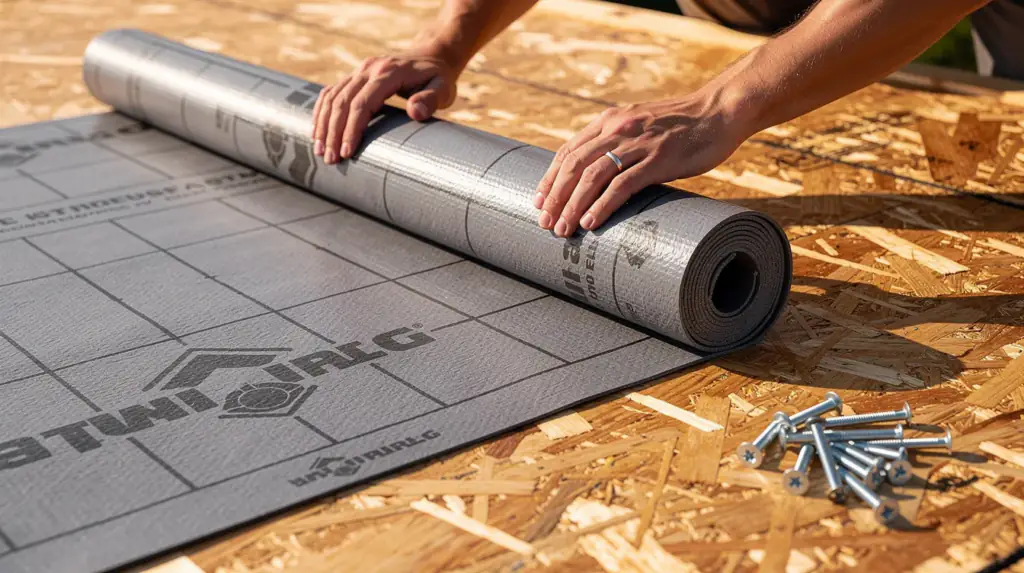
- Underlayment materials vary considerably in construction, heat resistance, installation requirements, and manufacturer specifications. Older Arizona tile roofs frequently contain traditional asphalt-based felt, while modern roofing systems may use high-temperature synthetic or self-adhered waterproofing products depending on the roof design and application.
- For Arizona tile roofs, the important question is not simply whether an underlayment is labeled felt, synthetic, or rubberized. The complete waterproofing system must be appropriate for Arizona heat and correctly detailed at valleys, walls, roof penetrations, edges, and other vulnerable areas.
- Advanced Precision Roofing uses an advanced high-temperature underlayment system selected for tile roofing in Arizona and installs it according to manufacturer specifications. The specific system recommended for a home is identified during inspection and included in the written scope.
When discussing options with a roofing contractor, ask about manufacturer heat ratings, how seams are treated, and what type of rubberized underlayment or synthetic is planned for valleys and around penetrations. High quality materials in those critical zones help prevent leaks for decades rather than years, making proper installation a long term investment.
Labor Costs: Why Tile Roof Underlayment Work Is So Labor-Intensive
Labor is a major component of tile roof underlayment replacement cost because the project involves much more than installing new roofing material. Existing tiles must be carefully lifted and staged, the old underlayment removed, the exposed roof deck inspected, necessary waterproofing and flashing corrections completed, the new underlayment installed, and the usable tiles reset. Every tile may be handled multiple times during a complete lift-and-relay project, which is why labor costs can represent a significant portion of the final price.
What the crew actually does across a multi-day project:
- Carefully lifting reusable tiles without unnecessary damage
- Sorting and staging reusable tile so it can be reset after the new waterproofing system is installed
- Stripping old underlayment and removing battens
- Installing new underlayment with correct laps and fastener patterns
- Reinstalling battens and carefully relaying tile row by row
- Custom flashing work at every penetration, valley, and roof edge
Roofs with many roof penetrations (solar mounts, satellite dishes, HVAC lines, skylights) involve extra flashing work and fine detailing. Underlayment replacement is essential for maintaining roof integrity, and cutting corners on labor to lower the price usually means cutting corners on waterproofing. Homeowners should look for estimates that break out labor costs and describe crew size and projected duration. This makes it easier to compare quotes from different roofing companies and spot where a low bid may be omitting scope.
Hidden Costs: Deck Damage, Flashings, and Tile Waste
Some costs only become clear when tiles are lifted and the roof deck is exposed.
Deck damage. Localized rotten decking around eaves, roof edges, or in valleys is common on East Valley tile roofs with 20+ years of service. Replacing damaged OSB or plywood is usually charged per square foot or per sheet. A fair estimate will include an allowance for a reasonable amount of deck repair rather than ignoring the possibility. Without this line item, costly repairs can surprise homeowners mid-project.
Flashings. Old or corroded flashings around chimneys, skylights, and roof-to-wall transitions may need full replacement to match the new roof underlayment’s expected lifespan. Drip edge, valley metal, and pipe boots are all part of a complete waterproofing scope.
Tile waste. Even with careful handling, a percentage of tiles will crack. Replacement tile costs depend on the number of damaged pieces, the tile profile, availability, and how difficult the existing roof is to match. Older or discontinued profiles can be more expensive and time-consuming to source. Homeowners should ask how their contractor handles unforeseen repairs financially: unit prices, allowances, or time-and-materials. Knowing this upfront makes the final invoice less of a surprise.
Is Underlayment Replacement Cheaper Than a New Tile Roof?
When most existing roofing tiles are reusable and structurally sound, a lift-and-relay is less expensive than a full roof replacement with brand-new tile. Tile roof installation costs range from $7 to $25 per square foot for a complete new roof, with concrete tile roofs costing $2 to $4 per square foot for just the tile material, clay tiles running $3 to $7 per square foot, and terracotta tiles at $5 to $10 per square foot. Compared to those tile roof cost figures, underlayment replacement at $4 to $6 per square foot (all-in) represents a fraction of a full replacement.
Situations where underlayment replacement approaches new roof cost include: very old, brittle tile with high breakage rates, discontinued tile profiles requiring expensive sourcing, or roofs with structural deck issues across large areas.
Some homeowners consider switching from tile to an asphalt shingle roof or another roof type when underlayment fails. That decision involves structural load (tile is heavier than asphalt shingles), home’s curb appeal, HOA rules, and local building codes. Metal roof costs also vary by region and profile, and some East Valley homes with flat or low-slope sections are better suited to spray foam roofing systems in Gilbert, AZ that provide both insulation and seamless waterproofing. If the tile is near the end of its useful life or badly mismatched from prior repairs, ask your contractor to walk through both scenarios so you can compare the cost to replace underlayment only versus a full new roof with new tile.
How Long Tile Roof Underlayment Lasts in Arizona & When to Stop Patching Leaks
Realistic service life for tile roof underlayment in Arizona is shorter than the tile’s life and varies by material and proper installation quality:
- Older builder-grade felt underlayment: often reaches the end of its useful life well before the tile above it, with APR noting a typical Arizona range of roughly 15 to 25 years for builder-grade felt
- Modern high-temperature underlayment: service life varies by product, roof design, exposure, and installation quality
- Specialized waterproofing membranes: performance and appropriate use depend on the specific roofing system and manufacturer specifications
Improper installation, poor ventilation, and excessive heat exposure shorten these ranges. A well-maintained tile roof can last over 40 years, but only if the underlayment beneath it is replaced when it degrades.
Warning signs that old underlayment has failed or is failing:
- Recurring roof leak after roof repair attempts
- Water stains on ceilings near eaves or valleys
- Brittle, cracked felt visible when a tile is lifted
- Slipped tiles, especially in valleys or at hip edges
- Damaged fascia or soffit from water running behind the drip edge
Beyond a certain point, repeated leak repair is less cost-effective than a full underlayment replacement. When leaks appear in multiple locations or return each monsoon season, the cumulative cost of patching can exceed what a full replacement would have cost years earlier. Periodic roof inspections can help identify deteriorated underlayment, damaged flashing, slipped or broken tiles, and other waterproofing problems before they lead to more extensive interior or decking damage. An inspection is particularly valuable when a tile roof is aging, has recurring leaks, or has already required multiple repairs.
What a Complete, Professional Underlayment Replacement Estimate Should Include
A detailed written proposal is the only reliable way to understand roof underlayment replacement cost and avoid low-ball bids that omit essential work. Most homeowners receive two or three quotes; knowing what to compare makes the difference between a sound decision and an expensive mistake.
Look for these items in every estimate:
- Measured roof size in squares (1 square = 100 sq ft), not just house square footage
- Roof pitch and access description (one-story vs. two-story, steeper roofs, limited staging)
- Underlayment specification: type, manufacturer, heat rating, warranty
- Flashing scope: valleys, roof penetrations, drip edge, roof-to-wall transitions, pipe boots
- Labor scope: tile removal and staging, underlayment installation method, tile relay, cleanup, disposal of old roofing materials
- Allowances: replacement tiles (quantity and sourcing), deck repair per sheet or per square foot, additional work around skylights or chimneys
- Inspection fees and permits, if applicable
Two roofing companies may provide very different quotes because of differences in assumed tile waste percentage, underlayment grade, flashing upgrades, crew size, and whether they include contingencies for hidden damage. Neither is necessarily wrong; the higher costs may reflect a more complete scope and broader roofing services in Gilbert and the East Valley.
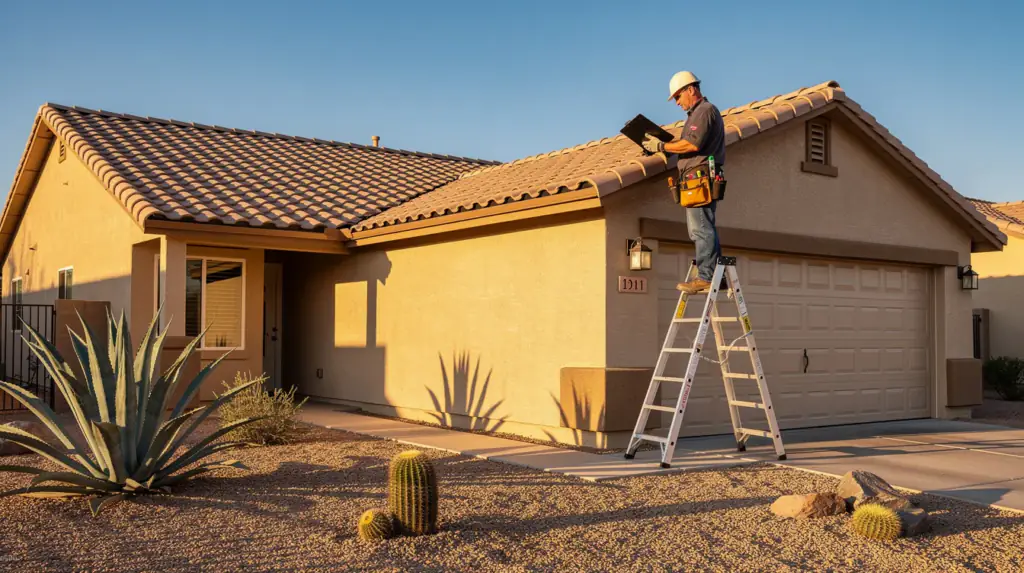
Request clear documentation showing the condition of the roof and the work being recommended. Advanced Precision Roofing begins with a free inspection in which the owner photographs the roof, followed by a written scope identifying the recommended system, materials, and price. If hidden deck or waterproofing problems are discovered after tear-off, they are photographed and discussed before corrective work proceeds.
Arizona-Specific Considerations: Heat, Monsoons, and Local Codes
Arizona’s climate makes tile roof underlayment replacement different from projects in cooler or wetter regions. Extreme heat and UV in the Phoenix metro accelerate underlayment aging and make material quality and correct installation details (laps, fasteners, flashings) critical to long-term performance, especially for long-lasting tile roofing installations in Gilbert, AZ. Premium materials rated for high heat outperform standard products by years, not months.
Monsoon storms bring short, intense rainfall with wind-driven water that tests valleys, roof penetrations, and every weak spot in the membrane. Most East Valley tile roofs sit on pitched structures designed for quick runoff, but low-slope transitions, dead valleys, and patio tie-ins require special detailing and sometimes rubberized underlayment to handle sideways rain, especially on more complex tile roofing systems in Gilbert, AZ. These areas add to the entire roof project cost but are not optional for a watertight result.
In Arizona, underlayment selection should account for extreme heat, UV exposure, thermal cycling, and wind-driven monsoon rain. East Valley homeowners should confirm that their contractor pulls required local permits and follows current code for roof repair and roof replacement, ideally working with an experienced roofing company in Gilbert, AZ that understands local requirements. Material availability, weather conditions, and project complexity can also affect scheduling throughout the year, particularly during periods of extreme heat or active monsoon weather.
How Advanced Precision Roofing Approaches Tile Roof Underlayment Projects
Advanced Precision Roofing is a family-owned East Valley contractor that handles underlayment replacement on tile roofs with direct owner involvement at every stage. The process starts with a free estimate that includes a photo-documented roof inspection, followed by a written proposal outlining scope, material specifications, and allowances for hidden conditions.
The company focuses on complete tile roofing systems rather than simply covering over aging materials. APR removes the existing underlayment to the roof deck, addresses necessary deck and fastening problems, rebuilds waterproofing details at valleys, walls, and penetrations, and installs the new underlayment system to manufacturer specifications. Hidden conditions are photographed and discussed with the homeowner before corrective work proceeds. Each roofing project is treated as a long term investment in the home’s waterproofing, not just a cosmetic fix.
Homeowners in Gilbert, Mesa, Chandler, Tempe, and Scottsdale can request inspections for slipped tiles, recurring leaks, aging underlayment, or other signs of waterproofing failure. The inspection helps determine whether the existing tile can be retained while the underlayment and waterproofing system are rebuilt, or whether the roof requires a more complete replacement. The next step after understanding tile roof underlayment replacement cost is to schedule a professional roofer for an on-roof inspection so the quote reflects the actual roof pitch, layout, and condition of your specific home, starting with a free roof inspection in Gilbert and the East Valley. Contact Advanced Precision Roofing for a free estimate tailored to your roof, not to averages.

