


Introduction: Is Spray Foam Roofing Right for Your Arizona Property?
Spray foam roofing is a seamless roofing system built from spray polyurethane foam, a material applied as a liquid that expands into a solid foam surface directly on your roof deck. It is one of the most common systems used on flat and low-slope roofs across Gilbert, Mesa, Chandler, Tempe, and Scottsdale because it combines waterproofing and insulation in a single application.
This guide is for both commercial building owners and homeowners with flat or low-slope areas like patio covers, walk decks, additions, and carports. If you have a steep tile roof or shingle roof, SPF roofing is not the system for you.
Here is what this article covers:
- What polyurethane foam roofing is and how it works
- The components that form a complete SPF roofing system
- Benefits, drawbacks, and real performance in Arizona heat, UV exposure, and monsoon conditions
- Installation process, maintenance, recoating, and when to repair vs. replace
- Common problems on foam roofs and how to address them
- Cost factors, comparisons to other flat-roof systems, and how to evaluate a contractor
Advanced Precision Roofing is a family-owned roofing contractor based in Gilbert, experienced with foam roofing, elastomeric coatings, and flat roof waterproofing systems throughout the East Valley.
What Is Spray Polyurethane Foam (SPF) Roofing and How Does It Work?
Spray polyurethane foam roofing is created by spraying two liquid chemicals-an isocyanate and a polyol resin-that react on contact and expand into rigid polyurethane foam. The foam adheres directly to the existing roof deck or an acceptable existing membrane, forming a monolithic, seamless surface with no joints or fasteners.
Spray polyurethane foam comes in open cell and closed cell grades. Roofing applications use closed cell foam because it is denser, has low water absorption, and provides higher compressive strength than open-cell foam. Advanced Precision Roofing installs closed-cell spray polyurethane foam in 2.5 lb, 2.8 lb, and 3.0 lb densities, selecting the appropriate foam for the individual roofing application.
Key technical points:
- Spray foam roofing provides strong insulation performance, with closed-cell polyurethane foam commonly providing an R value around R-6 to R-7 per inch
- Foam thickness is specified for the individual roofing system and may vary across the roof where additional insulation or improved drainage slope is required
- Foam density and other performance specifications should be selected for the specific roofing application and in accordance with manufacturer requirements.
- SPF roofing systems have been used commercially since the late 1960s and are now common on warehouses, offices, retail centers, and residential flat roofs across the Phoenix metro area
SPF roofs can increase energy efficiency by creating an airtight insulation barrier, directly reducing heat gain through the roof during Arizona’s extreme summer temperatures.
Main Components of an SPF Roofing System
A spray foam roof is a complete system, not just a layer of foam. Long-term performance depends on every component working together, from deck to topcoat.
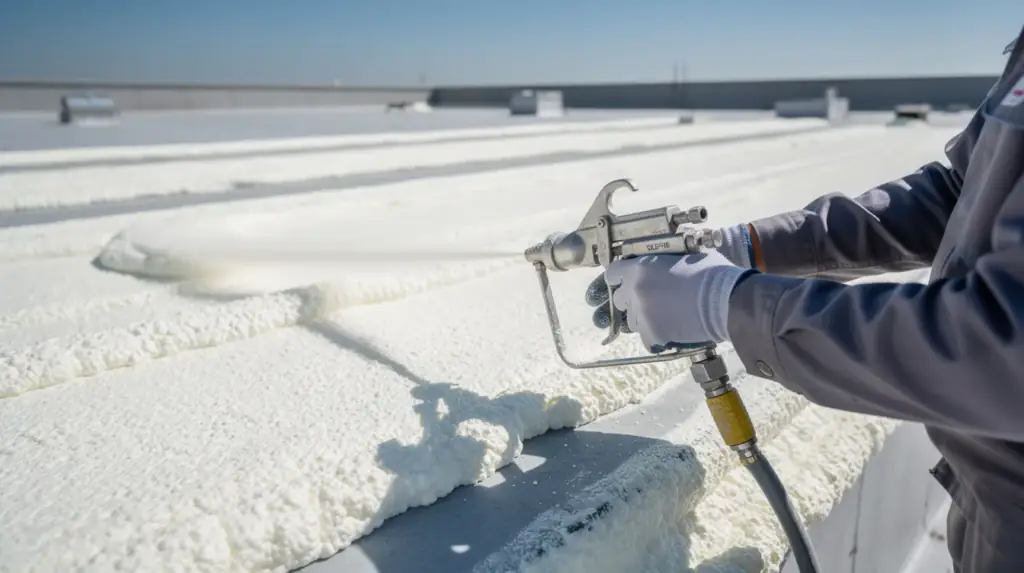
Here is how the system is built, from the bottom up:
- Existing roof deck or substrate: Plywood, concrete, modified bitumen, or metal deck. The surface must be dry, sound, and properly prepared. Saturated or badly deteriorated substrates may require a roof tear off or extensive repairs before foam can be applied. SPF roofing systems can be applied over existing roofs if those roofs are in good condition.
- Spray polyurethane foam layer: Closed cell foam applied at the specified density and thickness, including any tapering designed to improve drainage and slope.
- Protective elastomeric coating: A protective elastomeric topcoat is essential for SPF roofs to shield against UV degradation. Common chemistries include silicone (preferred where ponding water is likely), acrylic (lower cost, less ponding tolerance), and urethane coatings. SPF systems require elastomeric coatings for UV protection-without them, the foam degrades rapidly.
- Optional granules or surfacing: In high-traffic zones near HVAC units or walk paths, embedded granules or thicker coatings add mechanical resistance.
Edge metal, flashing tie-ins, penetrations (A/C stands, pipes, vents), and roof drains or scuppers are critical detailing points in any SPF roof design. These transitions are where most leaks originate when not properly addressed.
Where and Why SPF Roofing Is Used on Arizona Flat and Low-Slope Roofs
SPF roofing is ideal for flat or low slope roofs, especially in commercial applications. In the East Valley, typical candidates include warehouse roofs, strip center parapet roofs, office buildings, and residential flat patio covers or addition roofs, making SPF a strong option for many commercial roofing systems in Gilbert and the East Valley.
Spray foam systems work especially well on complex or irregular roofs because the foam is self-flashing-it conforms to HVAC curbs, skylights, parapet walls, and pipe penetrations without seams. Spray foam roofs are seamless and self-flashing, which enables fewer leak points compared to membrane systems that rely on seams and fasteners.
Arizona-specific climate factors that make SPF relevant:
- Intense UV exposure nearly year-round, with extremely high roof surface temperatures during Arizona summers
- Large temperature swings causing thermal movement that stresses seamed systems
- Heavy monsoon downpours that test drainage and waterproofing details
- High wind events during dust storms that can lift poorly adhered materials
Some roofs are not ideal candidates. Heavily ponding roofs with structural sag, roofs with extensive saturated insulation needing removal, and steep-slope assemblies where a complete shingle roofing system is more appropriate, and locations where overspray from SPF can affect nearby properties all require careful evaluation. Overspray requires careful containment measures during application.
Benefits and Drawbacks of Spray Foam Roofing in Arizona
SPF roofing can be a durable, long-term solution when designed and installed correctly, but it is not the right choice for every roof.
Benefits:
- SPF provides a high R value per inch, helping reduce heat transfer through the roof and lowering cooling demand when used as part of a properly designed roofing system
- Seamless, self-flashing membrane with no seams or fasteners to fail
- Ability to build slope with tapered foam to improve drainage toward scuppers and drains
- Lightweight system that often allows installation over an existing roof, reducing tear-off cost and waste
- Strong adhesion that provides resistance to wind uplift during monsoon events
- Spray foam roofing can reduce heat transfer and cooling demand in Arizona buildings, with actual energy performance depending on the complete building and roofing system
- Reflective roof coatings can provide high solar reflectance, helping reduce roof surface temperatures and cooling loads, with actual performance depending on the coating product and condition
- SPF systems can be installed quickly with minimal disruption to your business
Drawbacks:
- Sensitivity to UV exposure if coatings are not maintained-exposed foam degrades rapidly
- Spray foam roofing is vulnerable to physical damage from objects and foot traffic without protective surfacing
- Limited installation window during dust storms, high wind, or active monsoon rain
- Higher upfront cost than simple coatings-only options, making lifecycle cost and maintenance requirements important comparison factors
- Application requires careful overspray control, especially near vehicles, glass, and neighboring properties
Evaluate lifecycle cost, not just the cheapest bid. A foam roof that lasts decades with periodic recoating is a different product than a temporary coating repair.

Installation Process and Performance Factors for SPF Roofing Systems
The installation process for SPF roofing follows a specific sequence. SPF requires specialized installation techniques and trained personnel to ensure quality application. Here is what a professional install looks like:
- Roof inspection and moisture scan to identify wet insulation or substrate damage
- Surface cleaning-power washing, debris removal to ensure proper adhesion and coverage
- Repairs to bad decking or deteriorated areas; remove and replace materials as needed
- Priming the substrate where the manufacturer requires it
- Spray foam application using specialized spray foam rigs-SPF is applied using specialized professional spray equipment
- Protective coating application with proper dry times between coats, applied to the manufacturer-recommended thickness
SPF installation is highly weather-sensitive and requires dry conditions for application. SPF must be installed within the temperature, moisture, wind, and weather conditions specified for the roofing system. Arizona contractors must also account for monsoon rain, high winds, and other conditions that can affect spray application. Project duration varies with roof size, substrate condition, preparation requirements, detailing, coating system, and weather.
Factors that most affect long-term performance:
- Substrate condition and moisture content
- Foam thickness, density, and uniformity of coverage
- Coating type, measure of dry film thickness, and UV resistance
- Drainage design and positive slope toward drains and scuppers
Spray foam roof installation requires professional equipment, trained applicators, and careful control of material, substrate, and weather conditions. Advanced Precision Roofing provides foam roofing services in Gilbert and the East Valley for residential and commercial flat and low-slope applications. The chemistry, equipment, and safety requirements make this a project that demands professional expertise.
Maintenance, Recoating, and When to Repair vs. Replace a Foam Roof
Foam roofs are renewable systems. As long as the spray foam layer remains well-adhered and protected from UV, the roof can often be recoated instead of fully replaced. SPF roofing systems can last 30 to 40 years with proper maintenance.
Routine maintenance expectations:
- Inspect at least once per year, plus routine maintenance inspections are recommended after severe weather events like monsoon storms
- Keep drains and scuppers clear of debris
- Check for punctures, coating blisters, and areas with high foot traffic or equipment work
- Minor damage can be repaired with roofing-grade mastic or sealant when caught early
When recoating works: SPF roof coatings require periodic renewal, but the recoating interval depends on the coating type, thickness, climate, exposure, and condition found during inspection. A foam roof is a good candidate for recoating when foam is still well-adhered, there is no widespread moisture in the substrate, damage is mostly superficial to the coating, and foam thickness remains adequate. The recoating process involves cleaning, repairing blisters and punctures, scarifying loose areas, and applying new elastomeric coating to the proper thickness.
When full replacement is more appropriate: Extensive foam blistering or delamination, large areas of wet foam or deck damage, severe drainage issues requiring reworking the slope, or repeated leak history from poor original installation. These situations call for a complete roof service evaluation rather than another coating layer.
Common Spray Foam Roof Problems and How Advanced Precision Roofing Addresses Them
Common issues on aging or poorly installed SPF roofing systems in Arizona include:
- Coating wear and UV damage: UV exposure first damages the coating, then the foam surface, causing chalking, discoloration, and eventual erosion. Early intervention with recoating prevents full system failure. Regular attention to coating condition is particularly important in Arizona’s intense UV environment.
- Mechanical punctures: Foot traffic, dropped tools, and service work by HVAC or other trades can puncture foam. Small punctures are typically repaired with compatible sealant or patch materials based on the damage type.
- Ponding water: Roofs that were never sloped correctly, or where drains are blocked, develop ponding that accelerates coating wear. Drainage correction may require adding new tapered foam or addressing underlying structural issues.
- Flashing and penetration failures: Parapet caps, terminations at stucco walls, skylight curbs, and areas around A/C stands are frequent leak sources. These transitions need dedicated attention during both installation and ongoing inspections.
Many SPF roof problems are correctable when identified early. Advanced Precision Roofing provides photo-documented inspections so owners can see actual conditions and make informed decisions with ease, rather than guessing at what is happening under the coating.
Cost, Comparison to Other Flat-Roof Systems, and Choosing an SPF Roofing Contractor
Cost factors: Published market estimates commonly place spray foam roofing within a broad range of roughly $4.00 to $8.00 per square foot, although actual pricing varies by roof size, existing substrate condition, required foam thickness, coating system, access needs, drainage corrections, location, and project scope. These figures are general market estimates, not Advanced Precision Roofing pricing. While this may be more than a simple coating refresh, an SPF roofing system combines insulation and waterproofing functions through the spray foam layer, protective coating, and properly detailed roof transitions.
Comparison to other flat-roof options:
| Factor | SPF Roofing | Single-Ply (TPO/PVC) | Modified Bitumen |
| Seams | Seamless | Welded seams | Lapped seams |
| Insulation | Built-in, high R value per inch | Requires separate insulation | Requires separate insulation |
| Weight | Lightweight | Moderate | Heavier |
| Re-cover existing roof | Often yes | Sometimes | Depends on existing roof and system design |
| Maintenance approach | Inspect regularly and recoat as coating condition requires | Patch/replace sections | Recoat or overlay |
| What a professional proposal should include: Thorough roof walk, moisture evaluation, photos documenting deck and flashing conditions, proposed foam density and approximate thickness, coating type and targeted mil thickness, drainage and slope plan, and a clear maintenance and recoating recommendation. |
Questions to ask before choosing a contractor:
- How many SPF roofing projects have you completed in the East Valley?
- What coating systems do you use, and what are their UV resistance and performance specifications?
- How do you handle drainage design and slope correction?
- What is your recommended maintenance and recoating schedule?
- Are you committed to photo-documented inspections and transparent communication?
Advanced Precision Roofing approaches every SPF project with direct owner involvement, emphasis on drainage and waterproofing details, and a focus on long-term system performance. If you own a commercial or residential property in Gilbert or the East Valley with a flat or low slope roof or are comparing options to a new shingle roofing system, contact our team for a free photo-documented inspection to determine whether spray foam roofing is the right fit for your building.

