


If you own a home in the East Valley, there is a strong chance you are looking at a concrete tile roof right now. This guide is designed for Arizona homeowners considering, maintaining, or replacing a concrete tile roof, helping you make informed decisions that protect your investment and home. This guide covers everything Arizona homeowners need to know about how concrete tile roofing systems work, how long they last, what fails first, and how to make informed decisions about repair, replacement, or maintenance.
Concrete Tile Roofs in Gilbert & the East Valley: Quick Answers
A concrete tile roof is a roofing system built around molded concrete tiles that serve as the outermost protective shell of your roof. These durable tiles shield the layers beneath from sun, rain, wind, and impact. However, the tiles themselves are not the waterproofing layer. The actual water protection comes from the underlayment and flashing system installed on the roof deck, hidden beneath the tile.
Are concrete tile roofs well suited to the East Valley climate? They are widely used across Arizona because concrete tile can provide a durable exterior surface in intense heat, UV exposure, and monsoon conditions when it is installed as part of a properly designed roofing system. Fire ratings, wind ratings, tile weight, and expected service life vary by product and by the complete roof assembly. Because concrete tile is substantially heavier than asphalt shingles, the structure must be suitable for the selected tile system, particularly when changing from a lighter roofing material.
Quick pros:
- Long service life when properly installed and maintained
- Non-combustible concrete tile with fire performance determined by the complete roof assembly
- Strong performance in Arizona heat and UV exposure
- Distinctive curb appeal with many profiles and colors available
- Tiles often reusable during underlayment replacement
Quick cons:
- Higher upfront cost than shingles
- Heavy weight requires adequate roof framing
- Underlayment needs replacement before tile does
- Color fading possible over decades
- More complex installation and repair
Advanced Precision Roofing installs and replaces concrete tile roofing systems across Gilbert, Mesa, Chandler, Tempe, and Scottsdale as part of our broader roofing services in Gilbert and the East Valley.
What Is a Concrete Tile Roof? (System, Not Just Tile)
Concrete roof tiles are generally manufactured from cement, sand, water, and pigments that provide color. The material is formed into roofing tile profiles and cured to develop strength. The finished concrete tile creates a durable exterior roofing surface, but its long-term performance still depends on the underlayment, flashing, fastening, drainage, and other components beneath and around it.
But a concrete tile roof is not just the tile. It is a complete system with multiple layers working together. The key components include:
- Roof deck (typically plywood or OSB on Arizona tract homes)
- Underlayment (felt, high-temp synthetic, or self-adhered membrane) providing the actual waterproofing
- Battens or nailer strips for tile attachment and positioning
- Concrete roofing tiles in your chosen profile
- Metal flashings at every penetration, wall junction, and transition
- Valley metal and drainage components to channel water
- Ventilation (ridge vents, soffit vents) for attic airflow
- Ridge and hip tile systems sealed with mortar or mechanical fasteners
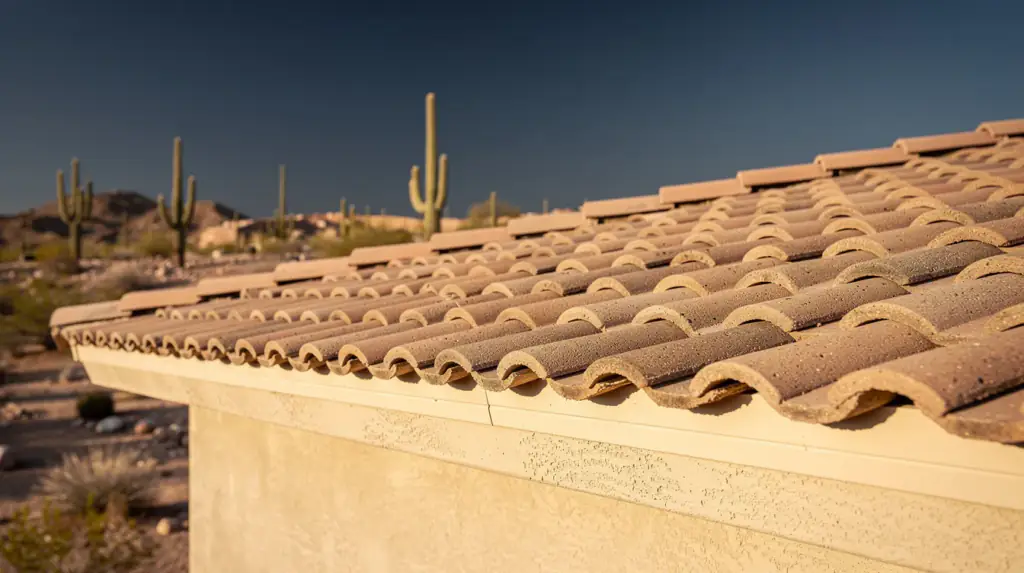
Concrete tiles come in various styles like Spanish S-tile, medium barrel, and flat profiles. Modern concrete tiles can mimic clay, wood, and natural slate appearances, giving homeowners a wide selection of architectural designs. Flat concrete tiles offer a sleek, geometric look suited to modern homes, while the high-profile Spanish barrel remains the most common style across East Valley subdivisions.
On many older Arizona tile roofs, the original concrete tile can remain serviceable even after the underlayment beneath it has deteriorated. That difference in service life is why an aging tile roof does not automatically require entirely new tile. That distinction matters more than many homeowners realize.
Why Concrete Tile Roofs Are So Common in Arizona
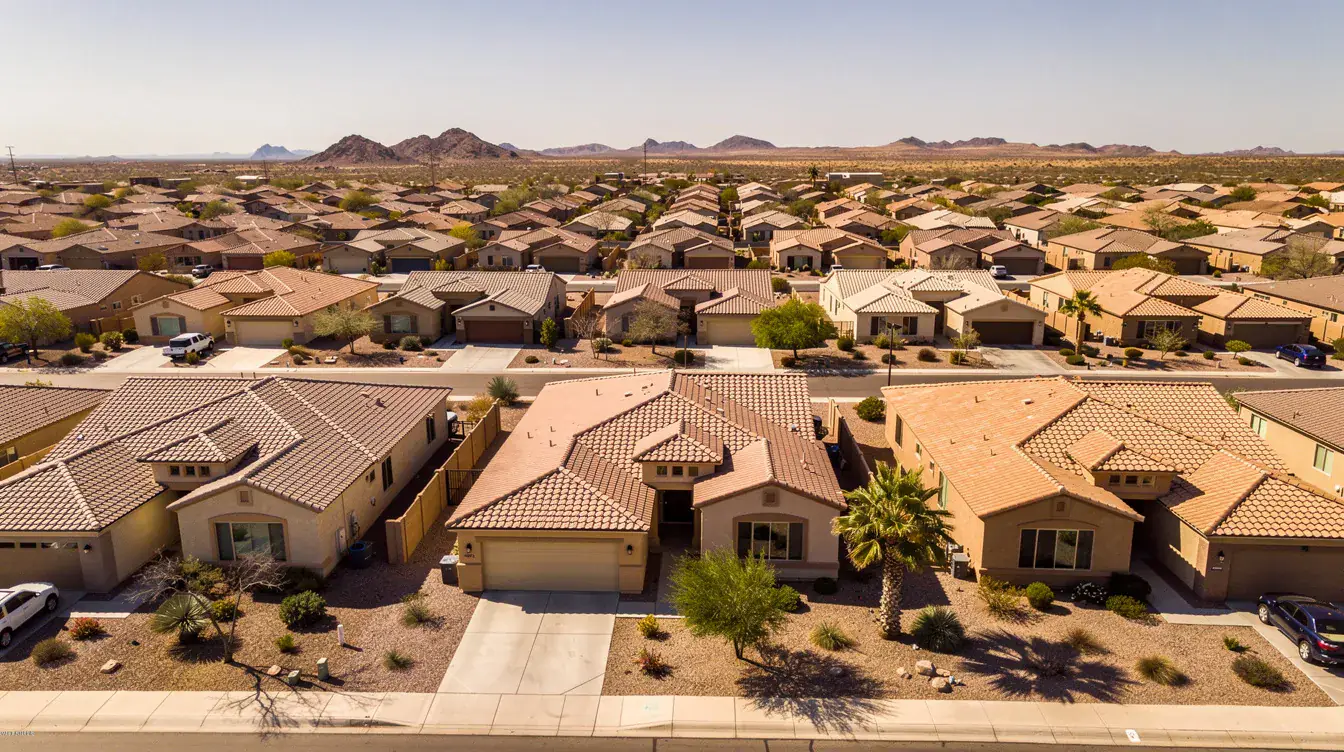
Concrete tile roofing is common throughout metro Phoenix and the East Valley. Its durability, appearance, and compatibility with many Arizona architectural styles have made it a familiar roofing material on homes throughout Gilbert, Chandler, Mesa, Scottsdale, and surrounding communities. Here is why:
- Extreme heat and UV resistance. Arizona roofs are exposed to intense summer heat and prolonged UV radiation. Concrete tiles handle this abuse far better than asphalt shingles, which degrade rapidly under intense UV.
- Fire resistance. Concrete tiles are non-combustible and carry a Class A fire rating. Fire performance can also be an important consideration, although requirements depend on the roof assembly, property, and applicable local or community standards.
- Energy efficiency. Concrete tiles are energy efficient due to their thermal mass and the natural airspace between the tile and the roof deck. The thermal mass of concrete tile and the airspace created by some tile roofing assemblies can influence heat transfer through the roof, although actual energy performance depends on the entire roofing and attic system.
- Monsoon performance. Properly installed tile systems with correct flashing and valley details handle heavy rain and high winds well, which matters during Arizona’s July through September storm season.
- Architectural compatibility. Spanish, Territorial, Santa Fe, and modern stucco styles are standard across the East Valley. Concrete tile roofs offer architectural versatility that pairs naturally with these styles, and they are available in a wide array of colors.
- Local availability. Manufacturers, suppliers, and experienced tile roofing crews have been established in Arizona for decades, creating economies of scale that keep concrete tile more accessible than in regions where asphalt shingles dominate.
How Concrete Tile Roofing Performs in Arizona Climate
Arizona puts every roofing material to the test. Here is how concrete tile handles the specific stresses of East Valley weather:
- Heat and UV. During Arizona summers, tile roofing systems are exposed to extremely high surface temperatures and prolonged UV radiation. The concrete shell handles this well. The underlayment beneath it does not fare as well over time, especially standard felt, which becomes brittle from intense monsoon rain events
- Thermal cycling. Repeated heating and cooling creates thermal cycling throughout the roofing system, affecting underlayment, flashings, fasteners, sealants, and other components over time. This stress primarily affects underlayment, flashings, and fasteners rather than the tile body itself.
- Wind and storm resistance. Wind resistance depends on the specific concrete tile, fastening method, roof design, and installation requirements. Proper fastening and detailing are particularly important during Arizona monsoon storms and strong desert winds.
- Heat transfer reduction. The thermal mass of concrete tile and the airspace present in some tile roof assemblies can help manage heat transfer, but actual thermal performance depends on the complete roofing system, insulation, ventilation, tile profile, and color. Light or reflective tile colors improve this further.
- Fire safety. A Class A fire rated roof assembly requires not just non-combustible tile but also approved underlayment and deck materials. Concrete tile delivers on the surface layer of that equation.
- Drainage. Desert landscaping debris, dust, and monsoon-blown plant litter can accumulate in roof valleys and around penetrations. Periodic clearing is necessary to maintain proper water drainage and prevent ponding that can force water under tiles during intense monsoon rain events.
Pros and Cons of Concrete Tile Roofs for East Valley Homes
A concrete tile roof is a significant investment, not a budget-grade option. It makes the most sense for homeowners who value long-term durability and plan to remain in their house for years. Here is a straightforward breakdown.
Pros:
- Long tile lifespan of 50 to 100 years with proper maintenance
- Class A fire resistance, enhancing safety in fire-prone desert conditions
- Strong performance against high winds and hail damage
- Concrete tiles can enhance curb appeal while providing durability across many architectural styles
- Tiles reduce heat transfer, making homes more energy efficient and lowering cooling costs
- Concrete tiles are often reusable during underlayment replacement, preserving your home’s appearance
- Low maintenance requirements beyond periodic inspections
Cons:
- Concrete tile roofing generally involves a higher upfront investment than asphalt shingles because of the tile material, handling requirements, installation details, and complete roofing system beneath it
- Concrete tile material costs vary significantly by manufacturer, profile, color, availability, and project requirements
- Concrete tile is considerably heavier than asphalt shingles, so the existing structure must be suitable for the roofing system. A structural evaluation may be necessary when converting a roof from a lighter material to tile
- Color fading on some tiles over decades of UV exposure
- Installation requires specialized skills and knowledge, making repairs more complex than shingle work
- The underlayment beneath the tile often reaches the end of its useful life before the tile itself, eventually requiring a major roofing project
Although concrete tile typically carries a higher upfront cost than asphalt shingles, homeowners should compare the complete roofing systems, expected maintenance, appearance, structural requirements, and long-term performance rather than evaluating material price alone, especially when considering asphalt shingle roofing systems in Gilbert.
How Long Concrete Roof Tiles & Tile Roofing Systems Last
This is where many homeowners get confused. The tile and the system beneath it have very different lifespans.
Concrete roof tiles can remain serviceable for decades when the material is in good condition and the roofing system is properly installed and maintained. In Arizona, it is common for the visible tile to remain usable after the waterproofing components beneath it have aged, which is why tile condition and underlayment condition should be evaluated separately. The tiles are durable and hold up well against UV, heat, and impact over decades.
The waterproofing underlayment beneath concrete tiles often reaches the end of its useful life before the tile itself. Service life varies substantially according to the underlayment product, installation quality, roof design, heat exposure, flashing details, drainage, and other conditions. Older felt systems and modern high-temperature underlayment products should therefore be evaluated based on their actual condition rather than assuming a universal replacement age.
Factors that influence underlayment life in Arizona include:
- Underlayment material type and quality
- Roof pitch, sun orientation, and overall heat exposure
- Attic ventilation quality
- Workmanship at flashings, valleys, and penetrations
- Complexity of roof geometry
Periodic inspections of concrete tile roofs are recommended to check for damage and early signs of underlayment distress, such as slipped tiles, exposed or curled felt, or staining in the attic. Damaged concrete tiles can often be replaced without disrupting the entire roof assembly. Catching problems early can prevent water damage and extend the time before a full roof replacement or targeted tile underlayment replacement in Gilbert becomes necessary.
Concrete Tile vs Clay Tile vs Asphalt Shingles in Arizona
This is one of the most common questions East Valley homeowners ask when planning a roofing project. Here is how the three main options compare in Arizona conditions.
Concrete tile vs clay tile:
- Both concrete tile and clay tile can provide durable roofing surfaces when installed as part of a complete roofing system
- Concrete and clay tiles differ in appearance, profiles, weight, manufacturing characteristics, availability, and cost
- Product weight varies, so structural compatibility should be considered when selecting a tile roofing system
- Concrete tiles are available in a wide variety of profiles and colors, while clay tile offers its own distinctive material characteristics and appearance
- Both depend on correctly installed underlayment, flashing, fastening, drainage, and waterproofing details beneath the visible tile
Concrete tile vs asphalt shingles:
- Asphalt shingles are a more affordable option up front, with faster installation and lighter weight
- Concrete tile and asphalt shingles have different service-life characteristics, maintenance needs, weights, installation requirements, and costs. Actual roof life depends on the specific material, installation quality, exposure, ventilation, and complete roofing system.
- Shingles absorb more heat, increasing attic temperatures and cooling costs
- Some East Valley communities have architectural or HOA requirements governing roofing material, profile, or color, so homeowners should verify applicable requirements before changing roof materials.
- Shingles do not require structural reinforcement and are easier to replace
When each makes the most sense: Concrete tile may appeal to homeowners prioritizing long-term durability and distinctive tile aesthetics, while asphalt shingles can offer a lower upfront cost and lighter-weight roofing system. The right choice depends on the home’s structure, desired appearance, budget, and project requirements. Other roofing materials like foam or coatings serve different applications, primarily flat and low-slope roofs. The right choice between concrete tile, clay tile, and asphalt shingles depends on the existing structure, desired appearance, budget, roofing-system requirements, and the homeowner’s priorities.
Common Concrete Tile Roof Problems in Arizona (And What Really Leaks)
Most leaks on concrete tile roofs are not caused by the tile itself. The real failures happen underneath.
As a tile roofing system ages in Arizona heat, common failure points can include:
- Dried, cracked underlayment. Felt becomes brittle, shrinks away from fastener penetrations, and loses its ability to shed water.
- Flashing failures. Metal flashing around vents, pipes, skylights, and wall-to-roof transitions corrodes or loses its sealant. Improperly installed or missing flashing is a frequent culprit.
- Debris-clogged valleys. Desert debris accumulates in valleys and creates dams that pond water during monsoon storms, forcing water under tiles.
- Ridge and hip mortar deterioration. Mortar cracking allows water, heat, and even pests to enter.
- Broken or slipped tiles. Cracked tiles expose the underlayment beneath to UV and rain, accelerating its deterioration. Concrete tiles can crack or break if someone walks on them incorrectly.
What homeowners typically notice first: Ceiling stains after monsoon storms, staining on interior walls, musty odors, or visible tile displacement. Multiple or recurring leaks can indicate deterioration beyond one isolated tile and should prompt evaluation of the underlayment, flashing, valleys, penetrations, and surrounding waterproofing details.
Replacing broken concrete tiles can correct surface damage, but it does not restore deteriorated underlayment beneath the tile. When the waterproofing layer has failed, the underlying roofing system must be evaluated rather than assuming tile replacement alone has solved the leak. Concrete tiles require a high-quality underlayment for water protection, and when that layer fails, the entire system needs attention.
Underlayment Replacement vs New Concrete Tile: How Roofers Decide
A remove-and-reset, or lift-and-relay, project involves carefully removing and staging reusable concrete tiles, removing deteriorated underlayment, inspecting the roof deck and waterproofing details, installing the new underlayment system, correcting necessary flashing and related issues, and resetting serviceable tile. Project duration depends on roof size, pitch, complexity, access, tile condition, and what is discovered once the existing system is opened.
When tile reuse makes sense:
- Tiles are structurally sound with minimal cracking
- The style and color are still available for infill pieces where needed
- The homeowner prefers the existing appearance
- Roof deck and framing are in good condition
When full new tile roofing is recommended:
- Many tiles are cracked, broken, or from a discontinued profile
- Widespread manufacturing defects or prior poor repairs
- Homeowner wants a different color, profile, or modern appearance
- Deck or structural damage requires significant work
Structural compatibility should be evaluated when installing a new tile system, particularly when converting from a lighter roofing material or when there are concerns about the existing structure. Depending on the property, project scope, and applicable requirements, additional structural evaluation may be necessary. A professional inspection that documents tile condition, underlayment state, flashing integrity, valley drainage, and penetration sealing is essential before deciding on the right path, particularly when evaluating tile roof waterproofing in Gilbert.
Maintenance & Care for Concrete Tile Roofs in the East Valley
Concrete tile roofs are generally low maintenance compared with other traditional roofing materials, but Arizona UV and heat still age the components beneath the tile, making periodic tile roof waterproofing and system checks in Gilbert an important consideration. Concrete tile roofs are generally considered relatively low-maintenance roofing systems, but the tile, flashing, drainage, penetrations, and waterproofing components should still be inspected periodically. Inspection frequency should reflect the roof’s age, condition, previous problems, and exposure to severe weather rather than relying on one universal schedule.
Practical maintenance considerations:
- Inspect after severe monsoon events for displaced or cracked tiles
- Clear valleys and gutters of debris to prevent drainage blockage
- Check flashing and sealants at penetrations (vents, pipes, satellite mounts, solar standoffs) and have them resealed when deteriorated
- Inspect ridge and hip mortar and replace or repair when cracked
- Verify that soffit and ridge vents are not blocked to maintain proper attic ventilation
- Avoid walking on concrete tile yourself. Improper foot placement cracks tiles. Rely on experienced roofers for any roof access
Sealing or painting tiles can improve appearance but does not restore core waterproofing. That function belongs to the underlayment and flashings beneath the tile surface. In the East Valley, homeowners should pay particular attention to heat exposure, monsoon-related damage, displaced or broken tile, drainage problems, deteriorated flashing, and signs that the waterproofing system beneath the tile is aging.
Choosing a New Concrete Tile Roofing System with Advanced Precision Roofing
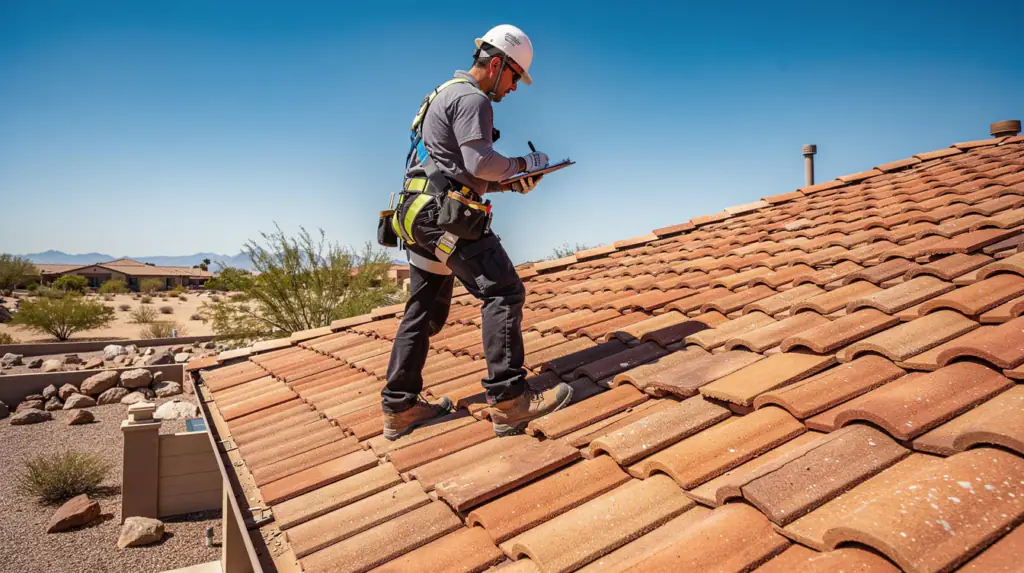
At Advanced Precision Roofing, every project starts with a free photo-documented inspection. We evaluate the full roofing assembly: deck condition, underlayment state, flashing integrity, ventilation, drainage at valleys, wall transitions, and penetrations, consistent with our family-owned Gilbert roofing company’s focus on complete systems. We discuss concrete tile vs clay tile vs asphalt shingle roofing options in Gilbert based on your home, your budget, and your plans.
Our approach focuses on the complete roofing system rather than patch repairs, reflecting how our Gilbert roofing company serves East Valley homeowners. When existing concrete tiles are in good shape, we can preserve and reset them during underlayment replacement. When the tile or system cannot reasonably be retained, we design and install complete new concrete tile roofs with the right underlayment, flashings, and ventilation for Arizona conditions.
We serve homeowners and commercial property owners throughout Gilbert, Mesa, Chandler, Tempe, and Scottsdale, with photo-documented roofing projects completed in Gilbert, Mesa, and Scottsdale. An informed homeowner is better positioned to evaluate the condition of the complete roofing system rather than focusing only on the visible tile, and our step-by-step roofing services process in Gilbert and the East Valley is designed to support that kind of decision-making. If your concrete tile roof is aging, developing recurring leaks, showing displaced or damaged tiles, or raising concerns about the underlayment beneath it, a professional evaluation can determine what the roof actually needs before you commit to a scope of work.

