
By Don Tomko, Owner, Advanced Precision Roofing · Family owned, licensed and insured · ROC #265504 (K-42) · Serving the East Valley since 2009
Synthetic underlayment is the stronger long-term choice for most Arizona tile roofs, and felt underlayment is the lower-cost one. The deciding factor is usually how long you plan to stay in the home. Synthetic is lighter, more tear resistant and built to repel water, while traditional felt costs less up front but ages faster in our heat. This guide compares the two types of roofing underlayment for East Valley homes. If you are weighing every factor, start with our guide on how to choose tile roof underlayment.
Why the underlayment matters on a tile roof
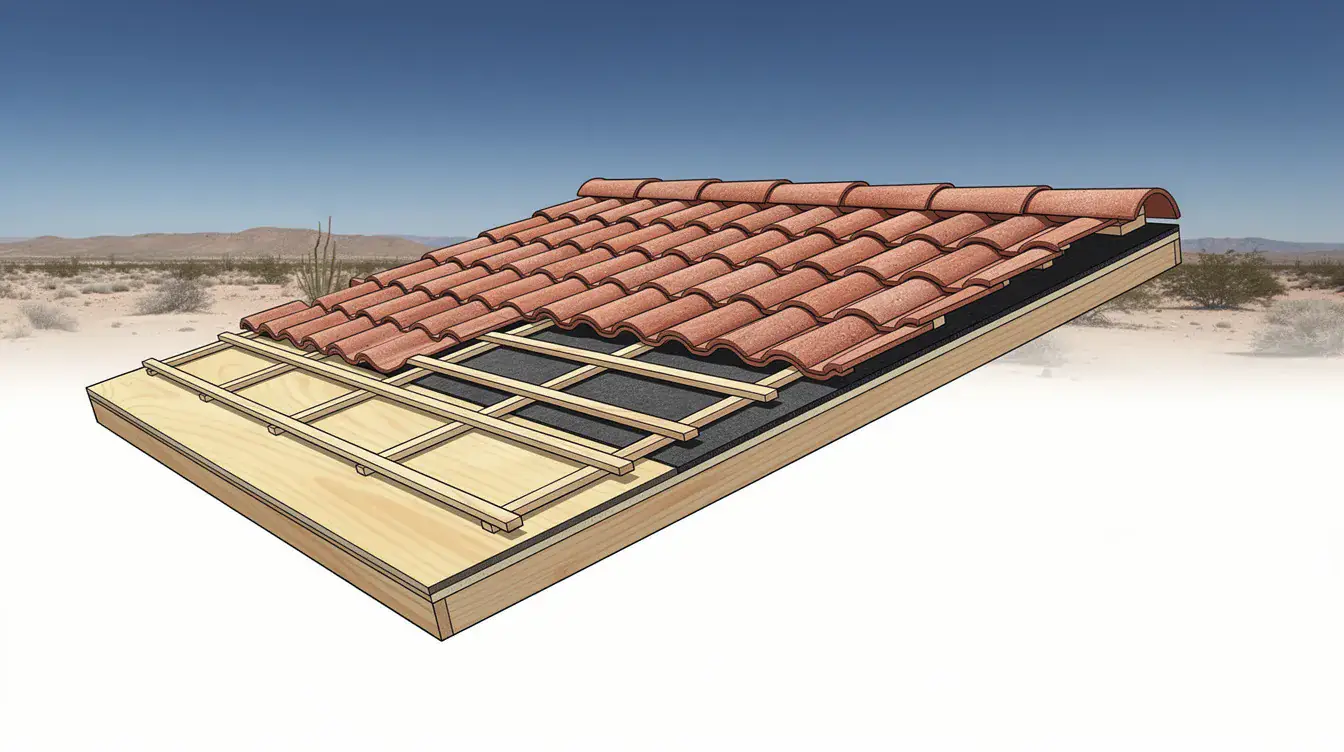
On a tile roof, the tile is the first shield against rain and sun, but the roofing underlayment underneath is the crucial layer that keeps water out of the roof deck. On Arizona tile roofs, felt underlayment typically lasts 15–25 years, while the tile on top can last 50+ years. That gap is why so many East Valley homeowners end up needing tile underlayment replacement while their tile still looks fine.
What is felt roofing underlayment?
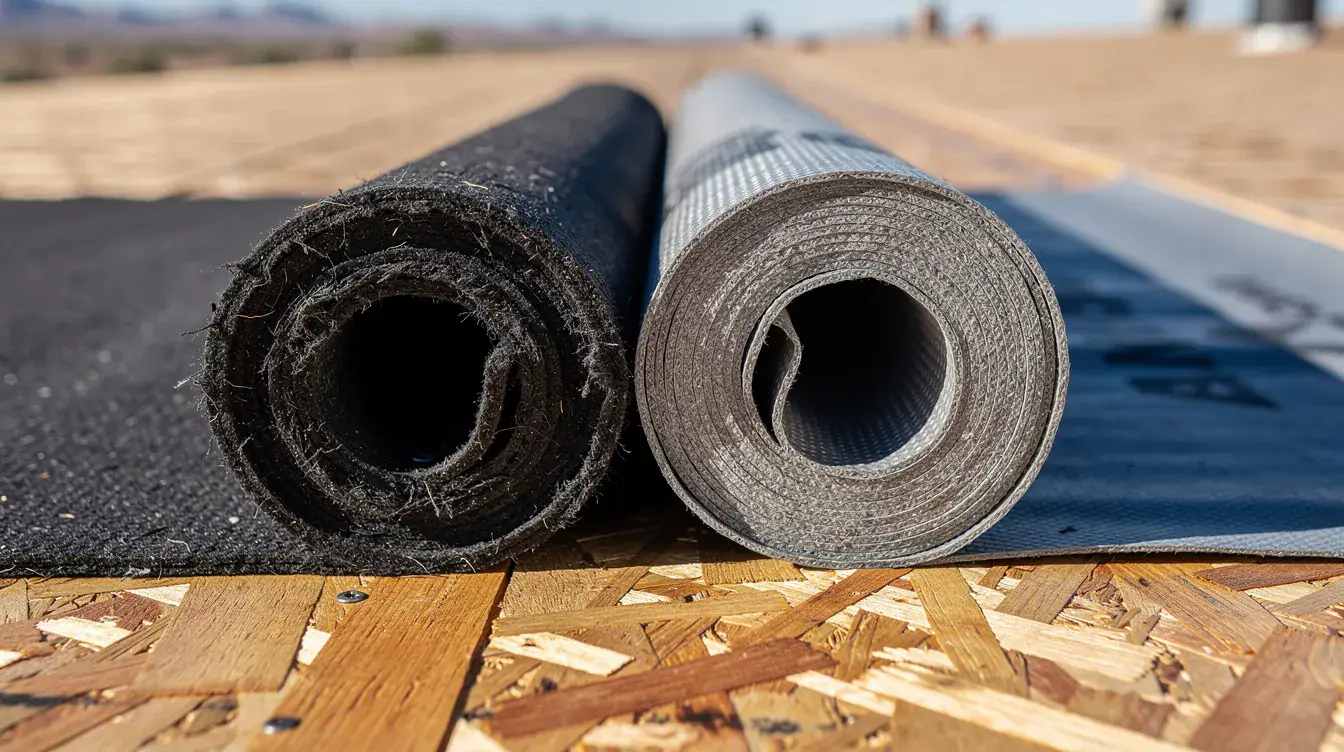
Felt roofing underlayment is the traditional roofing material under tile and shingles, and it has been used across the roofing industry for decades. According to Owens Corning, it is made by saturating a paper (cellulose, sometimes called organic felt) or fiberglass mat with asphalt, also called bitumen. Felt roofing comes in weights such as No. 15 and No. 30, and the heavier No. 30 is less prone to tearing than No. 15. At Advanced Precision Roofing, our felt option is a heavier 40 lb commercial-grade underlayment.
Felt has real weak points in the Arizona climate. Owens Corning notes that felt may dry out or leach oils in the heat, which reduces its ability to resist moisture and leaves the roof deck with less protection from water damage, and that it generally can’t be left exposed for more than a few hours, so it needs to be covered quickly during installation. Felt is also heavier, and its rolls hold less material, so a roof needs more rolls and more seams, and every extra seam is one more place to get right.
What is synthetic underlayment?
Synthetic underlayment is made from long-lasting polymers, such as polypropylene, polyethylene or polyester. Owens Corning describes it as extremely durable and up to four times lighter than felt in some cases, with an extremely high tear strength and a surface built to repel water. Because it is plastic-based, synthetic underlayment is typically resistant to mold growth.
The lightweight rolls are also wider and longer, so they cover more area. In one Owens Corning example, a 2,700 sq. ft. home needed about 3 rolls of synthetic underlayment versus 14 rolls of No. 30 felt underlayment. Fewer, lighter rolls can make it faster to install. Both materials need correct overlaps to prevent leaks, and synthetic is usually marked with overlap guides and indicators of where fasteners go.
One caution: synthetic materials are not standardized, so performance varies by manufacturer. Two products both called “synthetic” can perform very differently, which is why the exact product name matters more than the label.
What is a two-layer system?
A two-layer system puts a base layer under a synthetic top layer. One of the three options we install is a double layer of 30 lb base with Titanium UDL50 synthetic over it. Our third option, Westlake TileSeal, is a different type altogether: according to the manufacturer, Westlake Royal, it is a self-adhered, premium high-temperature underlayment for tile roofs that self-seals around fasteners.
Synthetic and felt underlayment side by side
| Felt underlayment | Synthetic underlayment | |
|---|---|---|
| Made from | Paper or fiberglass mat saturated with asphalt | Long-lasting polymers |
| Weight | Heavier; more rolls and seams | Lightweight; up to four times lighter in some cases |
| Tear resistance | Can tear easily in high winds and during installation | Very high tear strength |
| Water resistance | Mat can absorb water and wrinkle | Built to repel water; typically resists mold growth |
| Heat | May dry out or leach oils in the heat | Performance depends on the product |
| UV exposure during install | Generally a few hours at most | Some products allow extended exposure |
| Upfront cost | Lower | Higher |
Source: Owens Corning, for every row. Synthetic has several advantages on paper, but it is more expensive upfront. For a tile roof in our local climate and harsh weather conditions, the heat and durability rows matter most, because the underlayment spends decades protecting the roof deck from moisture under the tile.
Are synthetic underlayment problems real?
Yes, but most of them are not about the material itself. According to Angi, problems with synthetic roofing underlayment are often due to low quality or poor installation. Combine that with the fact that synthetic products are not standardized, and the pattern is clear: problems come from cheap products and careless installation, not from synthetic as a category.
That gives you two simple protections. First, get the exact product named in writing, not just “synthetic.” Second, ask whether that product is made for tile roofs in high heat.
“I walk every roof myself, and nothing is eyeballed,” says Don Tomko, owner of Advanced Precision Roofing.
Choosing the right roofing underlayment: Don’s take
This is a crucial decision, because the underlayment plays a vital role for decades after the job is done.
“Plenty of people tell me they’re selling in ten years… That’s why I like a long-life synthetic: it covers the ten-year plan that turns into fifteen or twenty.”
In practice, the right choice comes down to how long you want this roof to protect you. If there is any chance you will stay longer than planned, the longevity of a quality synthetic option is worth the higher upfront cost in the long run. Owens Corning makes the same point: the higher upfront cost could save you money down the road.
Cost considerations: when felt roofing still makes sense
Felt still has a place. It costs less up front, so it fits a tighter budget, and heavier felt is less prone to tearing than lighter weights. The trade-off is lifespan: because felt typically lasts 15–25 years and tile can last 50+, a felt roof may need more frequent replacement of the underlayment, which means replacing it again before the tile wears out. Synthetic offers better protection over that longer stretch, as long as the product is made for the heat.
For what drives the cost of the job, see our tile roof underlayment replacement cost guide. If your tile itself is at the end of its life, a new tile roof may be the right roofing project instead.
FAQ
Which is better, synthetic underlayment or felt paper?
For most Arizona tile roofs, synthetic underlayment is the better long-term choice because it is lighter, more tear resistant and built to repel water. Felt is the right choice when the lowest upfront cost matters most.
Is roofing felt waterproof?
Felt resists water, but Owens Corning notes that its mat can absorb water and wrinkle, and that shingles should go on right after felt is installed. Synthetic underlayment is built to repel water and stands up better to the elements during installation.
What are the different types of roofing felt?
Common weights are No. 15 and No. 30, and heavier felt is less prone to tearing. We also install a 40 lb commercial-grade underlayment.
How long does felt underlayment last in Arizona?
Felt underlayment on Arizona tile roofs typically lasts 15–25 years, while the tile on top can last 50+ years.
Do you nail or glue roof felt?
Felt underlayment and standard synthetic underlayment are fastened to the roof deck. Self-adhered underlayments, such as Westlake TileSeal, stick to the deck instead.
Get a free inspection
Not sure what is under your tile? Don walks every roof himself and will tell you which is the right underlayment for your plans. We serve homeowners in Gilbert, Mesa, Chandler, Tempe and Scottsdale, and financing is available. Call 480-255-1115 or learn more about our residential roofing services.


